
COOLING & INSTALLATION · UPDATED OCTOBER 3, 2026
Air-Cooled vs. Water-Cooled Spindles
Cooling is an installation requirement. Compare the circuit your machine can support and the documented spindle configuration, then check the rest of the fit.
Plan the airflow and fan connections.
An air-cooled spindle needs an unobstructed path around its cooling hardware. Check the drawing and the available space rather than assuming the existing enclosure provides enough clearance. Dust accumulation and restricted passages are installation and maintenance concerns to address for the supplied unit.
The GDF range includes manual-collet air-cooled configurations. The GDL40.5 ISO20 ATC configuration also uses air cooling, but its fan and sensors have separate 24 V DC auxiliary connections. That auxiliary supply is not the 220 V spindle winding.
Treat the water circuit as part of the machine.
Water-cooled models require a suitable circulation system, connector arrangement and hose routing. Before sizing a chiller, confirm the required coolant, temperature and flow for the supplied spindle.
GDZ-23 uses a water circuit with an 80 mm body and ER20 tooling. GDL120 uses water cooling with a BT30 ATC assembly. Sharing a cooling method does not make their mounting, power, pneumatic or electrical requirements alike.
Keep tooling, mounting and duty in the comparison.
GDF80-24Z/2.2B and GDZ-23 both have 2.2 kW rated output and ER20 tooling, but their cooling arrangements and installation dimensions differ. Compare the actual drawings, clamp area and connection locations before considering a change between them.
The GDL70 air-cooled long- and short-nose configurations have a 9 kW curve under S6-60% at TA20°C. The water-cooled B configuration has a 9 kW S1 curve at TA20°C. Cooling labels alone cannot explain that distinction; the duty information must stay with the selected model.
Ask for the requirements that remain open.
A cooling change can affect the enclosure, hoses, pump or fan wiring and the available installation space. Evaluate those changes with the machine rather than treating cooling as a standalone upgrade. Cooling type alone does not tell you how quiet a spindle will be, how long it will last or how it will cut.
Include photographs of the cooling connections and describe the existing circuit in the inquiry. If the technical document does not establish a required value, ask for confirmation before finalizing the installation.
- Airflow path or coolant circuit layout
- Connection type and hose clearances
- Fan and auxiliary wiring where applicable
- Mounting envelope and tool-change hardware
- Documented operating duty and unresolved cooling conditions
Questions before you choose.
Can I replace an air-cooled spindle with a water-cooled one?
Compare the exact mounting, tooling, drive, cooling circuit and duty requirements. The machine may need changes beyond the spindle itself.
Does water cooling establish continuous power?
Use the model-specific rating and power curve. The cooling method alone does not establish a continuous output rating.
RELATED SPINDLES
Configurations discussed in this guide.
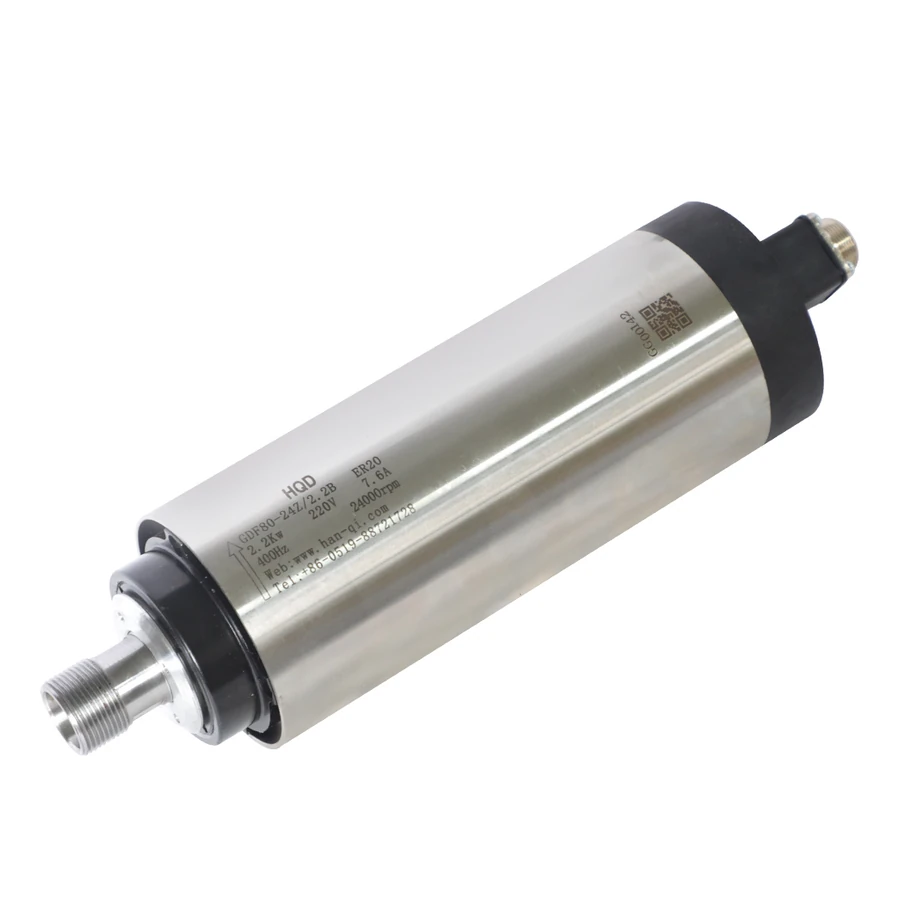
GDF · Manual
GDF80-24Z/2.2B
2.2 kW rated · ER20
24,000 rpm rated · Air-cooled
Ø80 mm · 269.5 mm overall · 125 mm clamp
View specifications →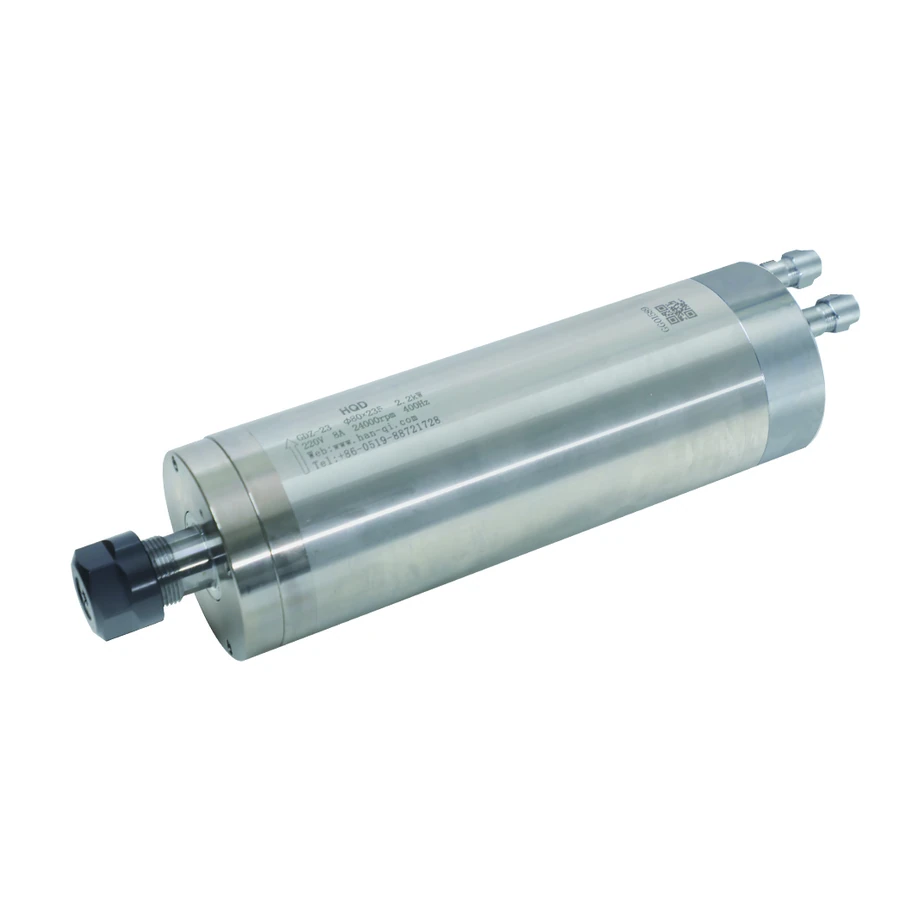
GDZ · Manual
GDZ-23
2.2 kW rated · ER20
24,000 rpm rated · Water-cooled
Ø80 mm · 268.5 mm overall · 120 mm clamp
View specifications →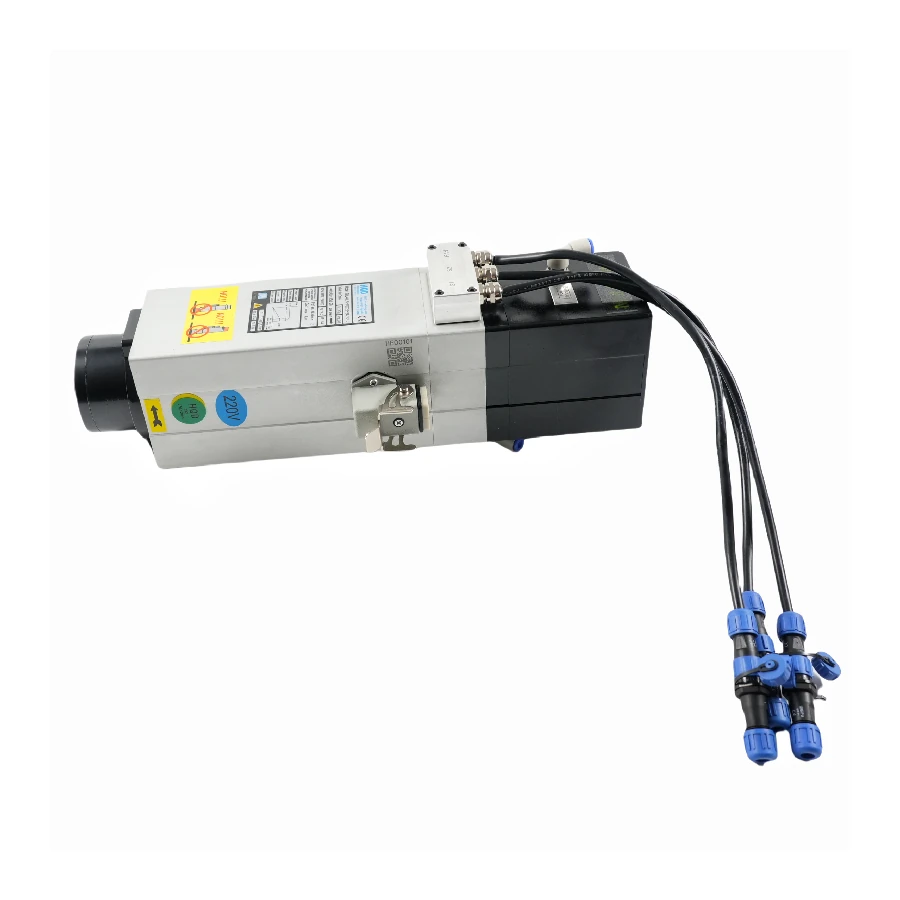
GDL · ATC
GDL40.5-ISO20-24Z/2.2
2.2 kW rated · ISO20
18,000 rpm rated / 24,000 rpm max · Air-cooled
372.5 mm overall
View specifications →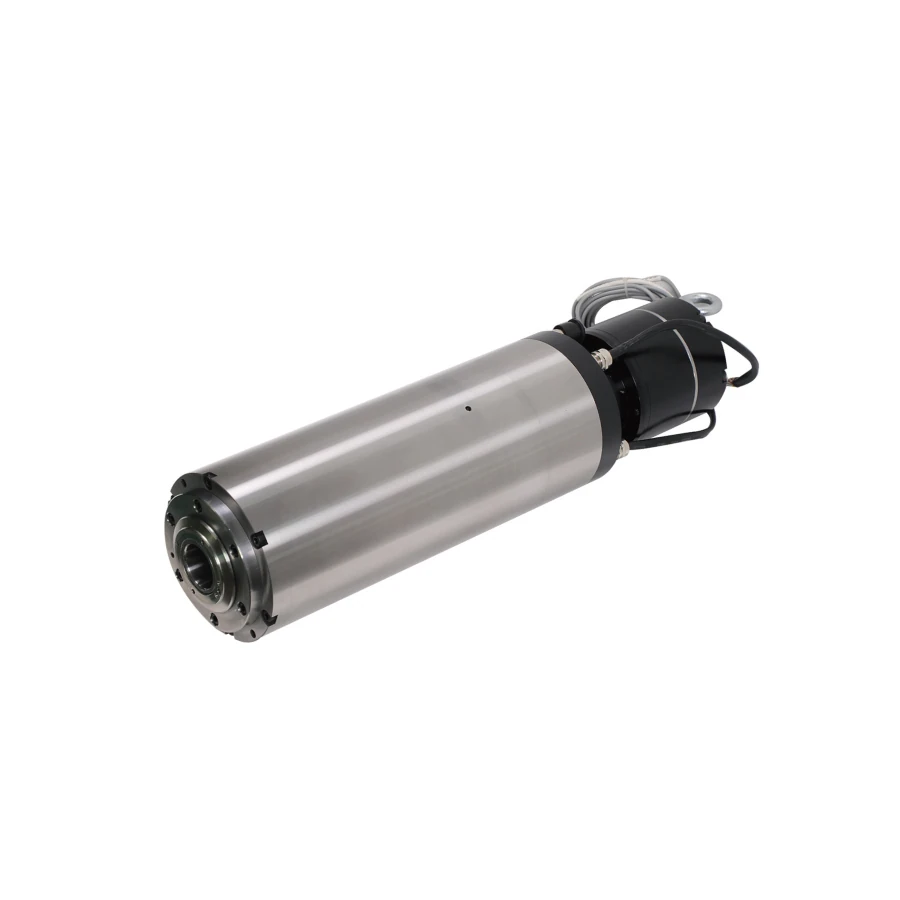
GDL · ATC
GDL120-30-24Z/5.5
5.5 kW rated · BT30
24,000 rpm rated · Water-cooled
Ø120 mm · 496.5 mm overall · 136 mm clamp
View specifications →